In short
- Flat twin and earth and Surfix are for fixed wiring; cabtyre is flexible cable for appliances and extension leads only.
- The size is the copper cross-section in square millimetres: thicker cable carries more current and loses less voltage over distance.
- Your electrician chooses the size from the wiring code. Buy exactly the type and size specified.
- Check the sheath for the maker's name, the SANS standard and the SABS mark. A magnet must not stick to the copper.
- By law, wiring must be done under the control of a registered electrician, who issues a Certificate of Compliance.
Electrical cable is sold by its type and its size in square millimetres, and both must be right. This guide explains the cables used in South African houses - flat twin and earth, Surfix, house wire and cabtyre - what the sizes mean, and how to make sure the cable you buy is the real thing. It does not explain how to wire anything: by law that work belongs to a registered electrician, who also decides the size. Use this to understand the quote and to buy exactly what was specified.
The cables used in a house
| Cable | What it is | Used for |
|---|---|---|
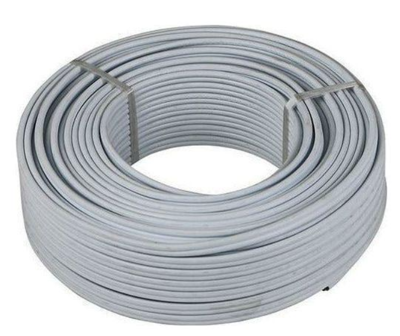
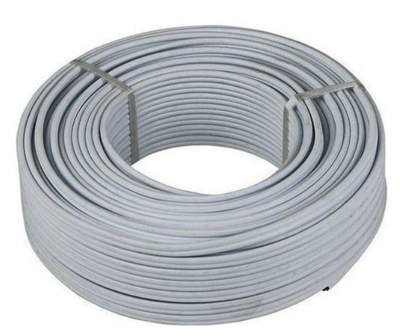
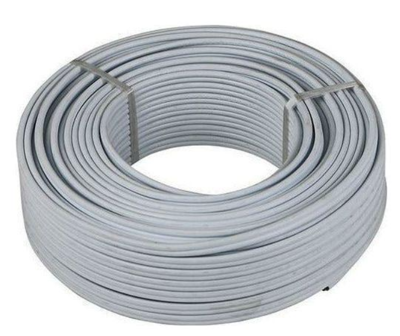
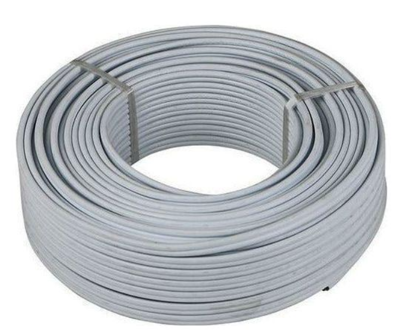
| Flat twin and earth | Two insulated copper cores side by side with a bare earth wire between them, in a flat white or black sheath. | Fixed wiring: on the surface, under plaster, in hollow walls and in the roof space. |
| Surfix | The same job in a round sheath, with a foil layer and a bare earth wire inside. | Fixed wiring in the same places as twin and earth. |
| House wire (GP wire) | Single insulated copper wires in plain colours. | Pulled through conduit. |
| Cabtyre | A flexible cable made of many fine copper strands. | Appliances, power tools, lawnmowers and extension leads. Not for fixed wiring. |
Twin and earth and Surfix may not be buried directly in concrete or screed, and joints in the wiring belong in boxes only. In twin and earth and Surfix from the main South African maker the cores are red and black with a bare earth. Flexible cabtyre uses brown, blue and green-and-yellow. Never rely on colour alone to tell what a wire does: old installations and amateur work often differ.
What the sizes mean
The size is the cross-section of each copper core in square millimetres. Twin and earth is made in 1.5, 2.5, 4, 6 and 10 mm². A thicker core carries more current and loses less voltage over a long run. The earth wire inside is thinner than the two cores: a 2.5 mm² twin and earth has a 1.5 mm² earth.
| Twin and earth size | Cable rating (maker's figure) | Voltage lost per amp per metre |
|---|---|---|
| 1.5 mm² | 17 A | 29 millivolts |
| 2.5 mm² | 23 A | 18 millivolts |
| 4 mm² | 30 A | 11 millivolts |
| 6 mm² | 38 A | 7.3 millivolts |
| 10 mm² | 52 A | 4.4 millivolts |
These are one maker's ratings for the cable under one set of conditions. The amp figure on a product listing can differ, because it depends on the conditions the cable was rated for. Neither is a guide to which circuit breaker to fit. The electrician works out the size from the wiring code (SANS 10142-1), allowing for the load, the length of the run, how the cable is installed and how hot it will get, and often ends up a size larger than the bare rating suggests.
Which size for which job?
People ask this more than anything else, and the honest answer is that your electrician decides. As a rough picture of what you will see on a quote: the thinner sizes are commonly used for light circuits, 2.5 mm² for plug circuits, and the thicker sizes for a stove, a geyser on a long run, or a supply to an outbuilding. A geyser maker such as Kwikot specifies a cable of at least 2.5 mm² for its geysers.
Two things explain why a quote sometimes asks for thicker cable than you expected:
- Distance. Voltage is lost along the cable. The table shows 4 mm² losing well under half of what 1.5 mm² loses, so a long run to a garage, a gate motor or a borehole pump needs a bigger size.
- The breaker protects the cable. A circuit breaker is there to stop the cable carrying more current than it safely can. If the breaker is rated higher than the cable, the cable is unprotected and can overheat. That is why the cable and breaker are chosen together, and why you should never fit a bigger breaker to stop one tripping.
How to tell good cable from bad
Sub-standard cable is sold in South Africa. The SAFEhouse Association has found copper-coated aluminium and copper-coated steel passed off as copper, insulation that is too thin, and cheap plastic that goes brittle in sunlight. Such a cable runs hotter than its size suggests and its insulation is more easily damaged, which is how fires and shocks start. Before you buy:
- Read the print on the sheath. It should show the maker's name, the standard it is made to (SANS 1507 for fixed wiring, SANS 1574 for flexible cable), the number of cores and the voltage rating.
- Look for the SABS mark and a maker's name you recognise.
- Look at the cable. Uneven insulation, a rough surface or bulges are warning signs.
- Try a magnet on the bare conductor. Copper is not magnetic. If the magnet sticks, there is steel inside.
- Feel the weight and check the price. A cable that is light for its thickness or far cheaper than the rest is suspect. This is most common in extension leads.
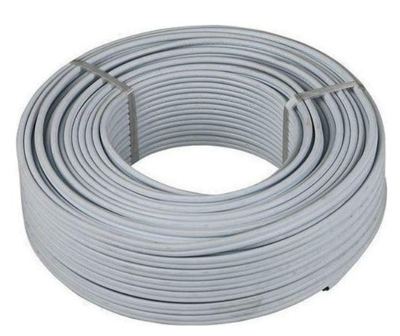
Cable comes from the maker in 100 metre coils. At HPM it is sold by the metre, so you can buy the length the job needs. Tell us the type, the size and the colour of the sheath.
What the law says about electrical work
- Who may do it. Under the Electrical Installation Regulations, all installation work must be done by, or under the general control of, a registered person: a registered single-phase tester, installation electrician or master installation electrician.
- Certificate of Compliance. Every electrical installation must have a valid certificate (CoC) with a test report, and only a registered person may issue one. After any addition or alteration you need a certificate for at least the new work.
- Selling a house. The certificate handed over when a property changes hands may not be older than two years.
- Earth leakage. The wiring code requires sensitive earth leakage protection, tripping at 30 milliamps, on all plug sockets.
Buying the cable yourself is fine. Just buy the type and size your electrician specified, from a maker whose name is on the sheath.
Products for this job
In stock at HPM now, with today's prices (incl. VAT). Tap a product for details, delivery and to add it to your cart.
Flat twin and earth cable (per metre)
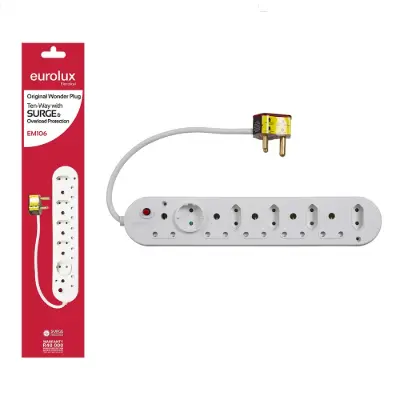
Extension leads and multiplugs
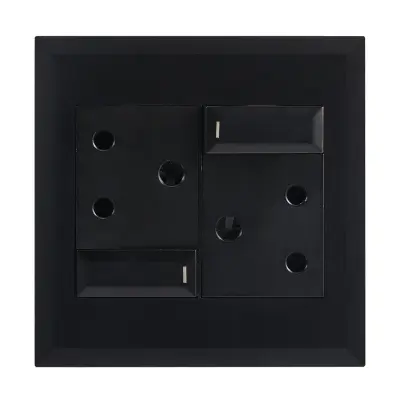
Plugs, switches and sockets
What you need
These links open the matching products in the HPM online store, with live prices (incl. VAT) and stock.
- Flat twin and earth cable - sold by the metre
- Cables and accessories - cable, extension leads and connectors
- Electrical - plugs, switches, sockets and breakers
- Extension leads
- Ask us for a price per metre - tell us the type, size and length
Questions and answers
What size cable do I need for plugs?
Your electrician chooses the size from the wiring code for the load, the length of the run and how the cable is installed. Plug circuits are commonly wired in 2.5 mm cable, but buy what your electrician specifies: a long run or a heavy load can need a thicker cable.
What is the difference between Surfix and flat twin and earth?
Both are cables for fixed house wiring and are used in the same places: on the surface, under plaster, in hollow walls and in roof spaces. Flat twin and earth is flat, with two insulated cores and a bare earth between them. Surfix is round and has a foil layer inside the sheath. Neither may be buried directly in concrete or screed.
Can I use cabtyre for house wiring?
No. Cabtyre is a flexible cable made for appliances, power tools and extension leads. Fixed wiring uses flat twin and earth, Surfix or house wire in conduit.
Can I do my own electrical wiring in South Africa?
The Electrical Installation Regulations require all installation work to be done by, or under the general control of, a registered person, and only a registered person may issue the Certificate of Compliance that every installation needs. You may buy the cable yourself: buy the type and size your electrician specified.
How do I know electrical cable is not fake?
The sheath should be printed with the maker's name, the SANS standard, the number of cores and the voltage rating, and carry the SABS mark. Copper is not magnetic, so a magnet must not stick to the conductor. Be wary of cable that feels light for its thickness or is priced far below the rest.
Related guides
Delivery from HPM
Parcels up to 50 kg are delivered by courier anywhere in South Africa, with the rate shown at checkout. Heavy building materials such as cement, bricks, sand, stone and timber are delivered by our own trucks in the Western Cape, and any order can be collected free in Struisbaai.
WhatsApp 076 370 4367 for a quote, call 028 435 6331 or email [email protected].
Sources
The facts in this guide were checked against:
- Guide to Electric Cables - SAFEhouse Association
- Low Voltage Cable Range (brochure, 2012) - Aberdare Cables
- Explanatory notes on the Electrical Installation Regulations, 2009 (Government Gazette 35180) - Department of Labour
- Sockets Guide - SAFEhouse Association
- Miniature Circuit Breakers Guide - SAFEhouse Association
- SANS 10142-1 (the wiring of premises), SANS 1507 (low-voltage cables) and SANS 1574 (flexible cords and cables) - South African Bureau of Standards
General guidance only. Products, sites and building rules differ - always follow the product data sheet and your approved plans, and check with your municipality or a registered professional where the work is structural, electrical or needs approval. More short answers: Building Facts & Advice.