In short
- Buy by lumens, not watts: about 800 lumens replaces an old 60 watt bulb, on 8 or 9 watts.
- Warm white (2700 to 3000 K) for living rooms and bedrooms; cool white or daylight for kitchens and work areas.
- B22 bayonet is the standard South African base. Take the old bulb with you to match base and shape.
- IP44 where water can splash, IP65 for lights out in the rain. Ordinary bulbs are IP20.
- Never put a non-dimmable LED on a dimmer.
The old way of buying a bulb, by watts, no longer works. An LED that gives the same light as a 60 watt bulb uses about 8 watts, so the wattage tells you the running cost and nothing about brightness. This guide explains the numbers on the box - lumens, kelvin, CRI and IP - which base and shape you need, and what to look for in outdoor and solar lights.
Lumens, not watts
Lumens measure the light a bulb gives. Watts measure the electricity it uses. To replace an old 60 watt bulb, look for about 800 lumens: a typical LED does that on 8 or 9 watts. The lumens are printed on the pack, along with the lifetime in hours.
The saving is real. Eskom's comparison puts a 60 watt incandescent bulb at 750 hours of life, a 14 watt compact fluorescent at 10,000 hours and a 9 watt LED at 15,000 hours. One LED outlasts twenty of the old bulbs and uses roughly 85% less electricity while it does. Nine-tenths of the power an incandescent bulb draws is lost as heat.
South African law now sets a minimum efficiency for ordinary light bulbs, which is why compact fluorescent and halogen bulbs are disappearing from the shelf in favour of LED.
Warm white, cool white or daylight?
The colour of the light is given in kelvin (K). The lower the number, the warmer and more yellow the light.
| Name | Kelvin | Suits |
|---|---|---|
| Warm white | 2700 to 3000 K | Lounges, bedrooms and dining rooms. Closest to the glow of the old bulbs. |
| Cool white | 4000 to 5000 K | Kitchens, studies and work areas. |
| Daylight | 5000 to 6500 K | Workshops, garages and detailed work. Most security floodlights. |
Makers do not all use the names the same way, so go by the kelvin number. Colour is not brightness: the same lamp in warm white and cool white gives almost the same lumens.
CRI (colour rendering index) says how true colours look under the light. Household LEDs are CRI 80, the legal minimum; CRI 90 lamps show colours more accurately.
Bases and shapes
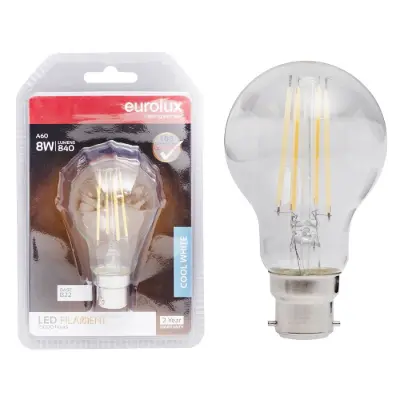
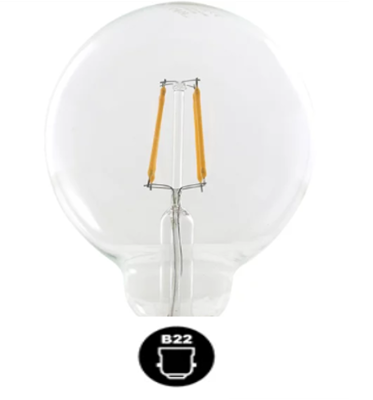
- B22: the bayonet cap with two pins. The standard in South African homes.
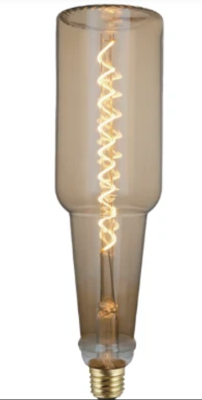
- E27: the large screw cap.
- E14: the small screw cap, for candle bulbs and small decorative fittings.
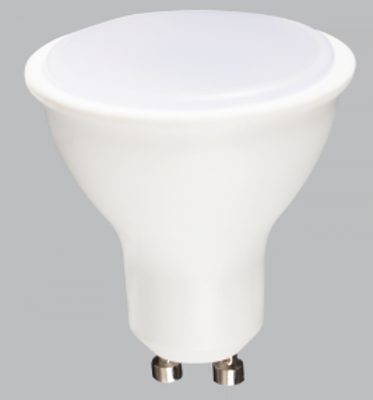
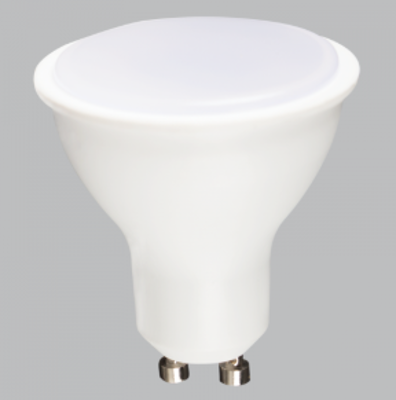
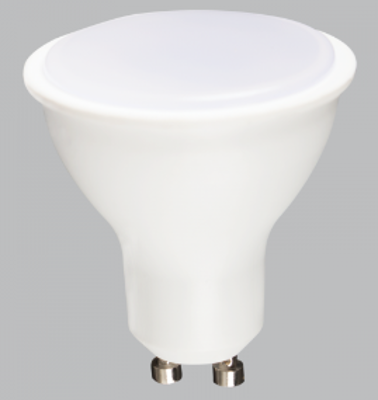
- GU10: a twist-and-lock base with two pins, for spotlights and downlights.
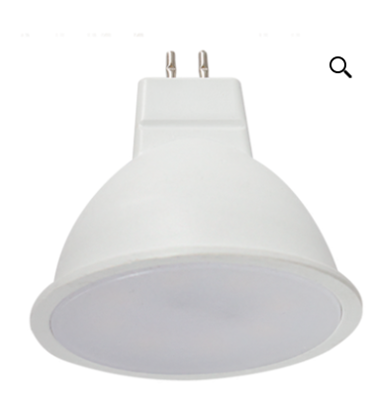
- MR16 (GU5.3): two thin pins that push in. These are 12 volt lamps fed by a transformer, and are not interchangeable with GU10.
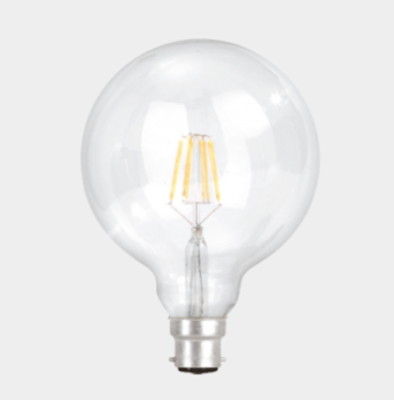
Check the shape as well as the base: a standard pear-shaped bulb, a globe, a candle or a reflector. The simplest way is to take the old bulb with you. For downlights, measure the hole in the ceiling and match it to the cut-out size printed on the box of the new fitting.
Dimmers. Whether a lamp can be dimmed is printed on it. A non-dimmable LED must not go on a dimmer circuit, and a dimmable one needs a dimmer the lamp maker lists as compatible.
IP ratings: bathrooms and outdoors
The IP rating has two digits. The first is protection against dust, the second against water. The higher the digit, the better the protection.
| Rating | Means | Where |
|---|---|---|
| IP20 | No protection against water | Dry rooms indoors. Ordinary bulbs are IP20. |
| IP44 | Protected against splashes | Bathroom ceilings and other places water can splash. |
| IP54 | Dust-protected, splash-proof | Covered stoeps and walkways. |
| IP65 | Dust-tight, protected against water jets | Fully exposed outdoors: rain, wind-blown dust. |
| IP67 | Dust-tight, survives brief immersion | Places that may flood briefly. |
Outdoors and in a bathroom it is the fitting, not the bulb, that carries the rating. For floodlights look for IP65 or higher. An IP rating covers dust and water only; it says nothing about rust, so at the coast look at what the body of the fitting is made of as well. A sealed fitting is not automatically better indoors, because it traps heat, and heat shortens the life of an LED.
Floodlights, sensors and solar lights
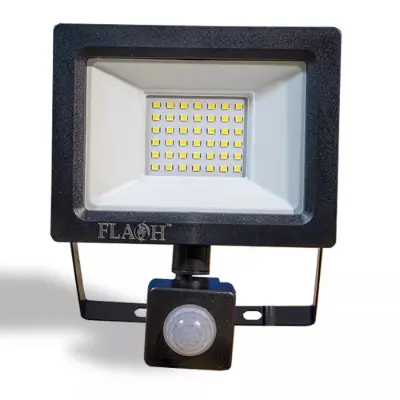
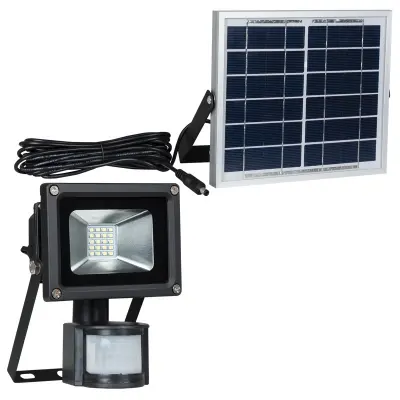
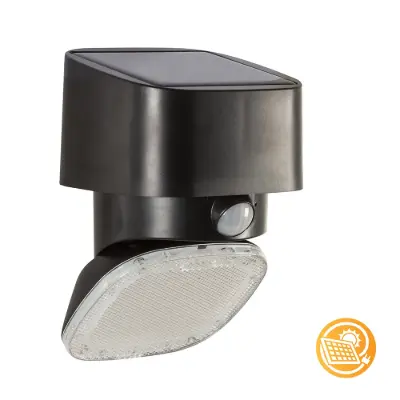
- Motion-sensor floodlights come on when something moves. Choose one where you can adjust the sensitivity and how long it stays on, and test it from time to time.
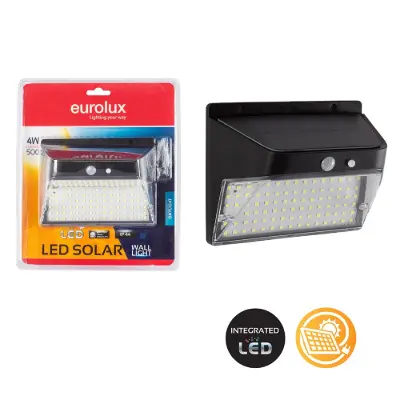
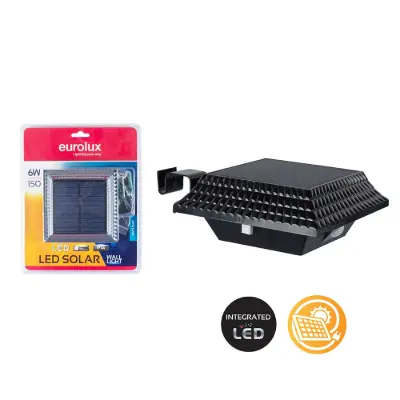
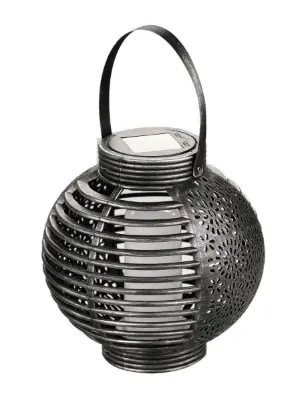
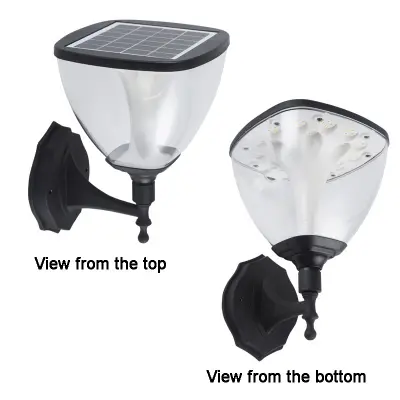
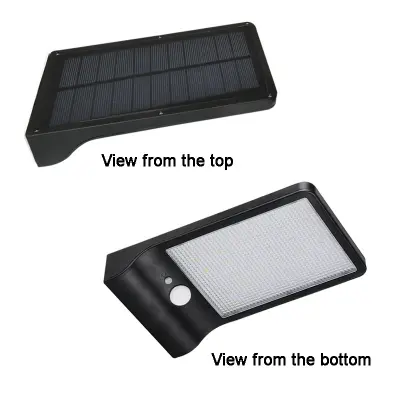
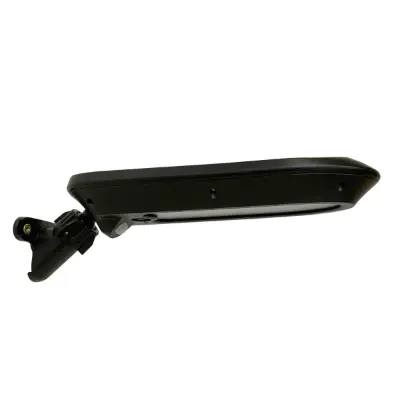
- Solar lights charge by day and light at night. They need no wiring, can be moved, and keep working in a power cut.
- Put the panel in full sun, clear of the shade of trees and buildings, and wipe it with a damp cloth now and then. Trim plants that grow over it.
- The battery wears out first. Rechargeable batteries have a limited life; replace them with the same type and capacity.
- Aim outdoor lights downwards so that they light your property and not the neighbour's bedroom.
Fitting and disposal
Changing a bulb is your job: switch off first. Installing or replacing a fixed fitting, downlight, floodlight, sensor, dimmer or transformer is electrical installation work for a registered electrician. Old compact fluorescent bulbs and tubes are hazardous waste. Take them to a shop with a take-back bin or an e-waste point, not the dustbin.
Related: power cuts and surge protection and house wiring cable.
Products for this job
In stock at HPM now, with today's prices (incl. VAT). Tap a product for details, delivery and to add it to your cart.
LED globes and bulbs
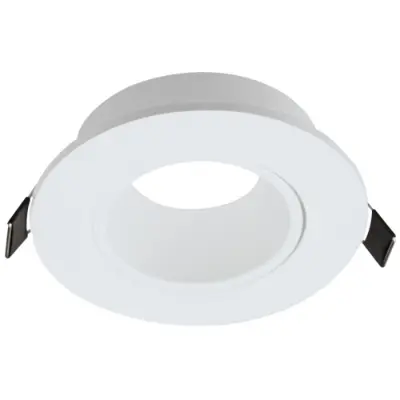
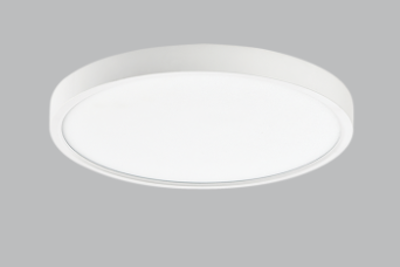
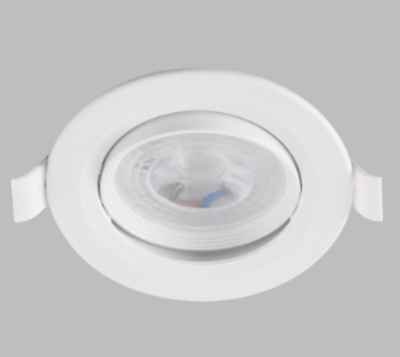
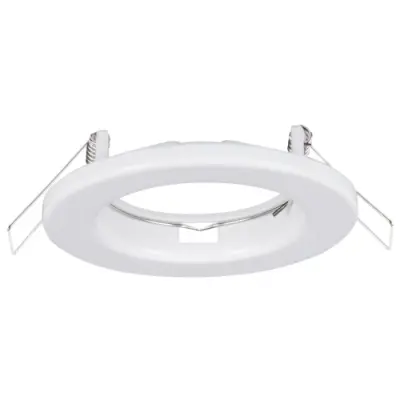
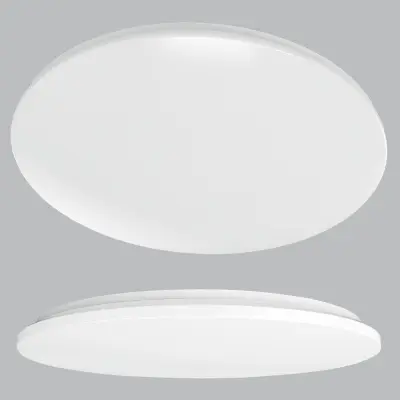
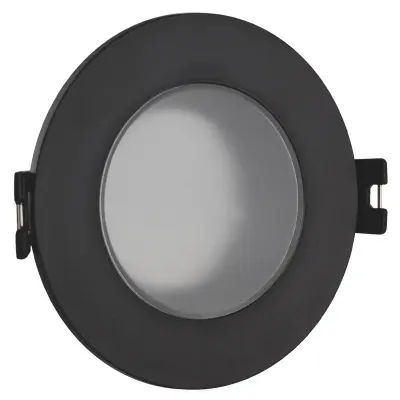
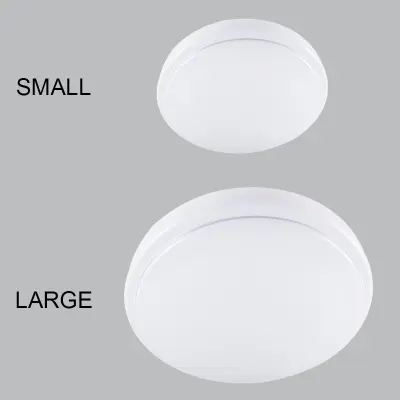
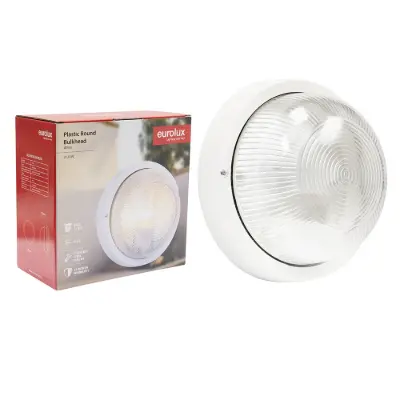
Downlights and ceiling lights
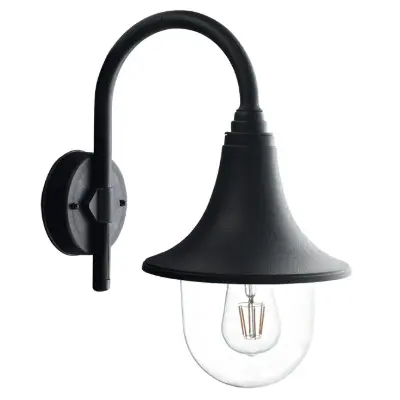
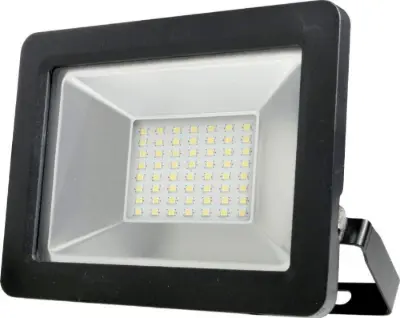
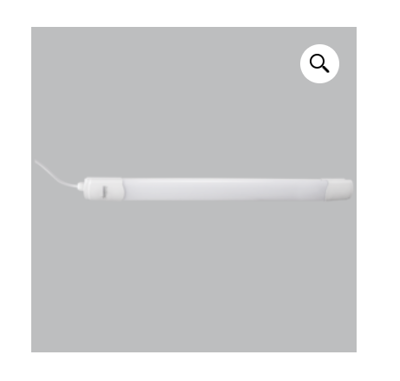
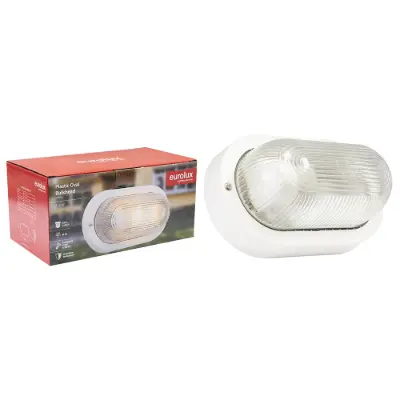
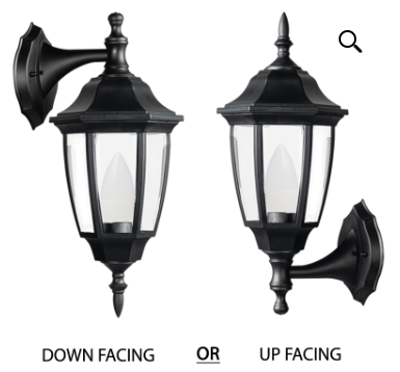
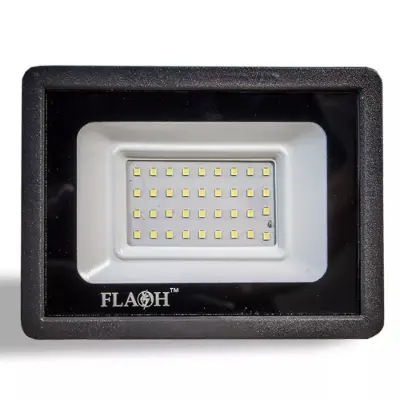
Floodlights and outdoor lights
Solar lights
What you need
These links open the matching products in the HPM online store, with live prices (incl. VAT) and stock.
- Lighting - bulbs, downlights, ceiling lights and outdoor lights
- LED globes - B22, E27 and E14
- Downlights - check the cut-out size
- Floodlights - with sensors, and solar
- Solar lights
- Rechargeable and emergency lights
Questions and answers
How many lumens do I need to replace a 60 watt bulb?
About 800 lumens. A typical LED bulb gives that on 8 or 9 watts. Lumens measure the light; watts only measure the electricity used.
What is the difference between warm white and cool white?
Colour temperature, measured in kelvin. Warm white is 2700 to 3000 K, a yellowish light close to the old bulbs, and suits lounges and bedrooms. Cool white is 4000 to 5000 K, a whiter light for kitchens and work areas. Daylight is 5000 to 6500 K. It is not a measure of brightness.
What IP rating do I need for an outdoor light?
IP65 for a light that is fully exposed to rain, and at least IP54 under a covered stoep. For a bathroom ceiling, at least IP44 where water can splash. The rating belongs to the fitting; ordinary bulbs are IP20.
Can I use an LED bulb on a dimmer?
Only if the bulb is marked dimmable, and then only with a dimmer the lamp maker lists as compatible. A non-dimmable LED must not be used on a dimmer circuit.
How much electricity does an LED bulb save?
Roughly 85% against the incandescent bulb it replaces: Eskom compares a 9 watt LED with a 60 watt bulb. The LED also lasts about 15,000 hours against 750.
Related guides
Delivery from HPM
Parcels up to 50 kg are delivered by courier anywhere in South Africa, with the rate shown at checkout. Heavy building materials such as cement, bricks, sand, stone and timber are delivered by our own trucks in the Western Cape, and any order can be collected free in Struisbaai.
WhatsApp 076 370 4367 for a quote, call 028 435 6331 or email [email protected].
Sources
The facts in this guide were checked against:
- Efficient lighting this Summer - Residential fact sheet (2020) - Eskom Energy Advisory Service
- Light bulbs: what to know - Eurolux
- Eurolux Embraces South Africa's Stringent Lightbulb Legislation (2024) - Eurolux
- Philips CorePro LEDbulb ND 8-60W A60 E27 827 - product data - Signify South Africa
- Compulsory Specification VC 9109 for General Service Lamps (Government Gazette 48652, 24 May 2023) - Department of Trade, Industry and Competition
- IEC 60529: Degrees of protection provided by enclosures (IP Code) - International Electrotechnical Commission
General guidance only. Products, sites and building rules differ - always follow the product data sheet and your approved plans, and check with your municipality or a registered professional where the work is structural, electrical or needs approval. More short answers: Building Facts & Advice.