In short
- Choose the fixing for what the wall is made of first, and for the weight second.
- The drill bit is the same size as the plug: a 6 mm plug takes a 6 mm hole and a 4 to 5 mm screw.
- Drill 10 to 20 mm deeper than the plug, and use a screw long enough to pass right through it.
- Expanding anchors need solid masonry; near edges and in hollow block use a chemical anchor.
- Drywall holds only light items. Fix heavy things into the studs or the brickwork behind.
Almost everything that falls off a wall was fixed with the wrong fixing for that wall, or with the right one in a hole that was too big, too shallow or too close to an edge. The fixing has to suit what the wall is made of first, and the weight second. This guide matches fixings to brick, concrete, hollow block and drywall, and gives the drill and screw sizes that go with the common wall plugs.
Start with what the wall is made of
- Solid brick or concrete: the easiest. Nylon wall plugs for light and medium loads; sleeve anchors and expansion bolts for heavy ones.
- Hollow block or perforated brick: fixings that expand hard can crack the thin walls of the block. Use a universal plug that knots up in the hollow, or a chemical anchor with a mesh sleeve for heavy loads.
- Drywall and ceiling board: the board itself holds only light things. Use drywall plugs or toggles for those, and fix anything heavy into the studs or the brickwork behind.
- Wood: screws straight into the timber. No plug.
If you are not sure, drill a small test hole. If the bit suddenly breaks through into a gap, the wall is hollow.
Nylon wall plugs: drill, plug and screw sizes
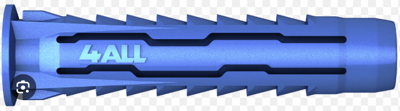
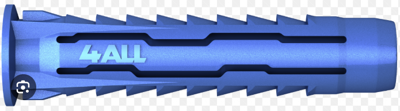
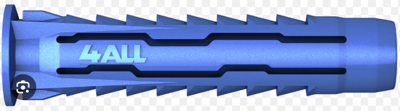
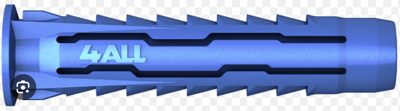
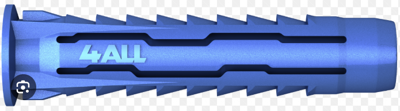
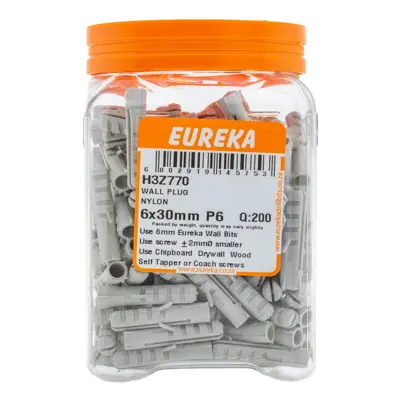
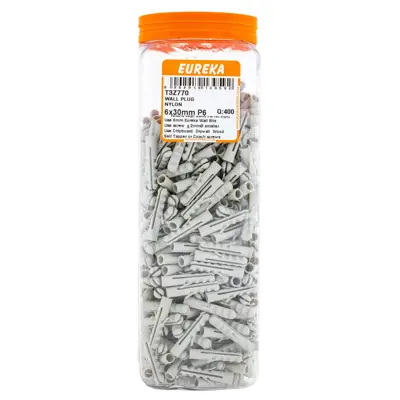
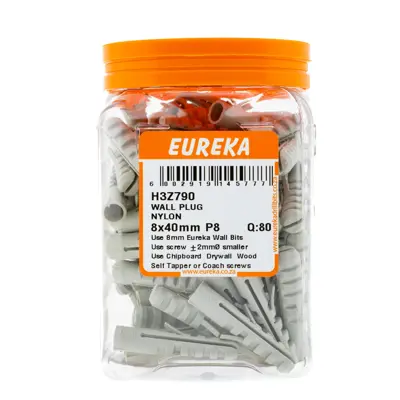
A nylon plug expands as the screw is driven in and grips the sides of the hole. The drill bit is always the same diameter as the plug. These are the sizes from a leading maker's table:
| Plug | Masonry drill bit | Hole at least | Screw thickness |
|---|---|---|---|
| 5 mm | 5 mm | 35 mm deep | 3 to 4 mm |
| 6 mm | 6 mm | 40 mm deep | 4 to 5 mm |
| 8 mm | 8 mm | 50 mm deep | 4.5 to 6 mm |
| 10 mm | 10 mm | 70 mm deep | 6 to 8 mm |
- Drill deeper than the plug is long, by 10 to 20 mm, so the screw tip has room.
- Screw length = the length of the plug + the thickness of what you are fixing + the thickness of the screw. A screw that stops short of the end of the plug does not expand it fully.
- Use a wood or chipboard screw in a nylon plug.
- Clean the dust out of the hole before the plug goes in.
How much a plug holds depends on the wall far more than on the plug: the same plug holds much less in a soft or hollow block than in concrete. The pack gives the figure for each wall type. Use that, not a rule of thumb.
Heavy loads: sleeve anchors, expansion bolts and chemical anchors
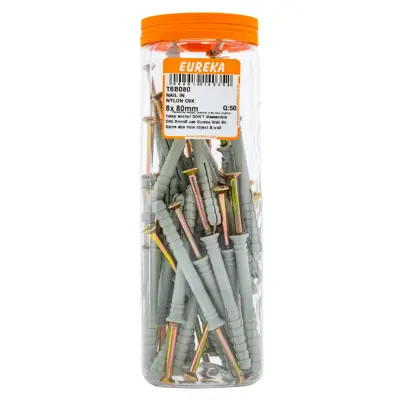
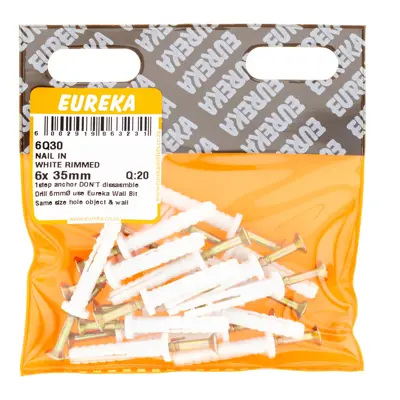
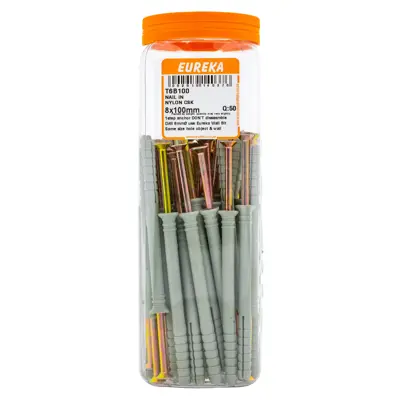
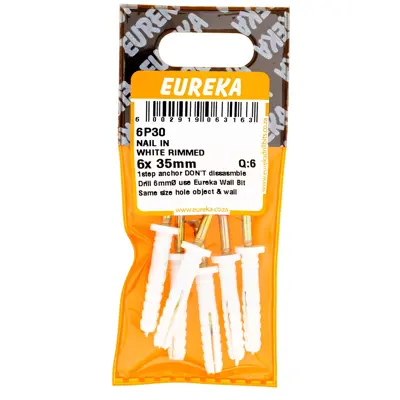
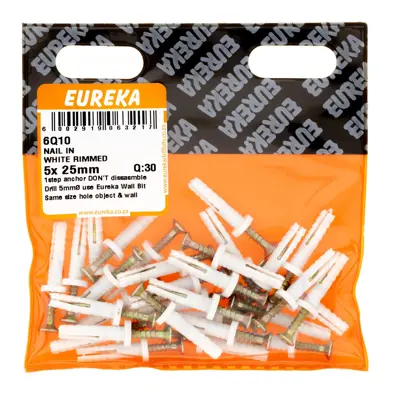
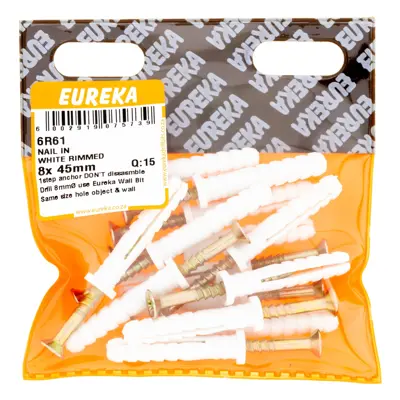
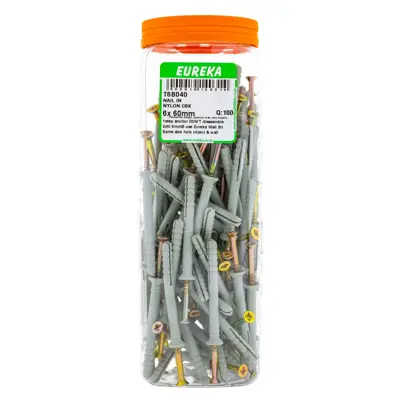
- Nail-in anchors. A plug with its own nail: push it through the item into the hole and hammer the nail home. Quick for battens, skirting, drywall track and pipe clips on brick and concrete.
- Sleeve anchors and expansion bolts. Tightening the bolt pulls a cone into a metal sleeve, which presses hard against the hole. For heavy items in concrete and solid masonry. Because they push outwards, they need solid material and room: too close to an edge or in a hollow block they split the wall.
- Chemical anchors. A resin injected into the hole glues a threaded rod in place. Nothing expands, so there is no bursting force. That makes them the choice near edges, in weaker masonry and, with a mesh sleeve, in hollow block. The hole must be brushed and blown clean or the resin bonds to dust.
- Coach screws have a hex head and are driven with a spanner, into a heavy-duty plug in masonry or straight into timber.
Drywall and ceilings
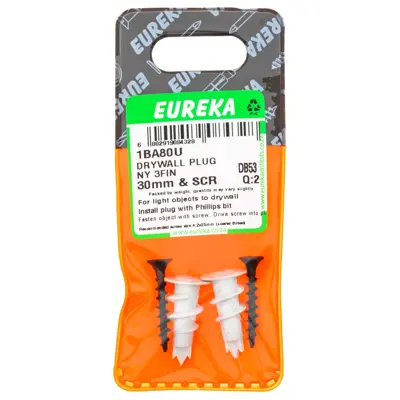
- Self-drilling drywall plugs (nylon or zinc) screw straight into the board. For light items only.
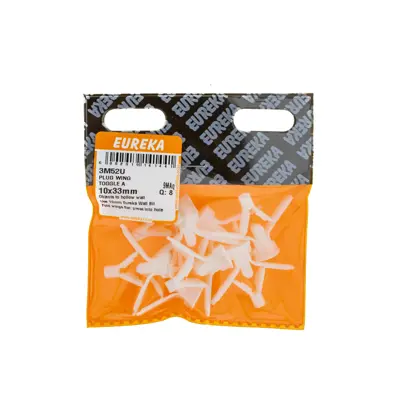
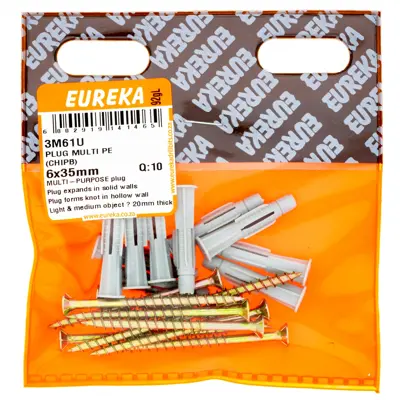
- Wing and multi plugs open or knot up behind the board. Light items.
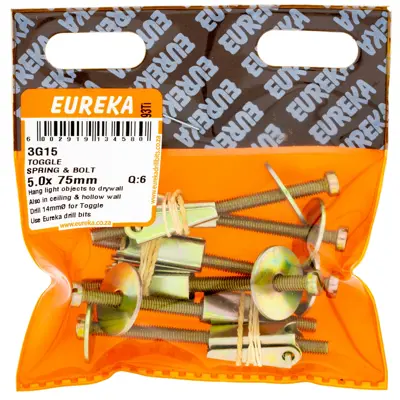
- Spring toggles have metal wings that fold to go through the hole and spring open behind the board. They are the strongest of the board fixings, for medium-weight items.
- Anything heavy - a TV bracket, a basin, wall cupboards, shelving that will be loaded - must be screwed into the timber or steel studs, or through to the brickwork, not into the board alone.
For fixing the board itself, fine-thread drywall screws are for thin steel studs and coarse-thread ones for timber. Ceiling board screws have a larger head.
Choosing the screw
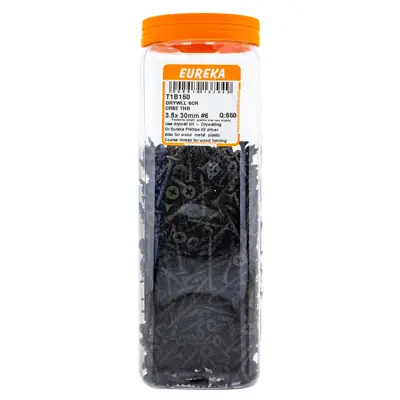
- Chipboard screws are the everyday screw: coarse thread, sharp point, for wood, board and wall plugs. Part-threaded (smooth shank) pulls two pieces of wood tight together; full thread grips along its whole length.
- Decking screws are coated or stainless steel for outdoor timber.
- Drive type. Pozi is the common cross head. Square and Torx (star) drives grip the bit better and slip less.
- At the coast, plain zinc-plated screws and anchors rust quickly outdoors. Use stainless steel or a properly coated fixing: see galvanised vs stainless steel fasteners.
Why fixings fail
- Hole too big or plug too small: the plug spins or pulls straight out.
- Hole too shallow or screw too short: the plug never expands properly.
- Too close to an edge or to another fixing: the masonry breaks away in a wedge.
- Wrong fixing for the wall: an expanding anchor in hollow block, or a plain plug in board.
- Rust: the fixing looks sound from outside until it lets go.
Check for cables and pipes before you drill, and wear eye protection. For anything that people's safety depends on - balustrades, handrails, carports, awnings, hammock or swing points, anything hung overhead - have the fixing chosen from the anchor maker's tables or by an engineer. The right drill bit for each wall is covered in choosing drill bits.
Products for this job
In stock at HPM now, with today's prices (incl. VAT). Tap a product for details, delivery and to add it to your cart.
Wall plugs
Sleeve, nail-in and chemical anchors

Drywall plugs, toggles and screws
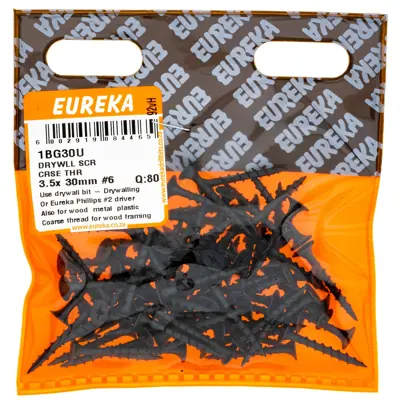
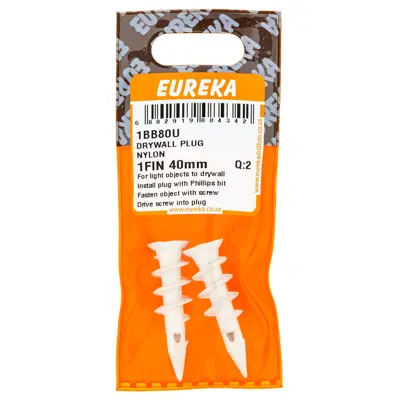
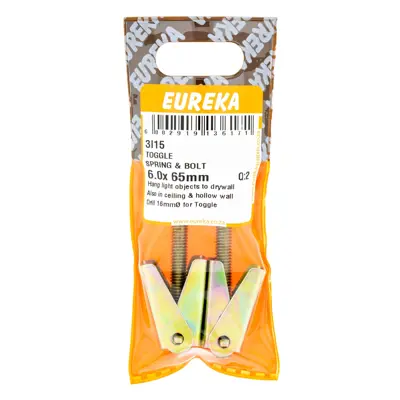
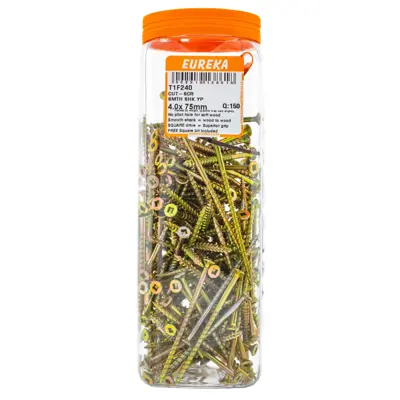
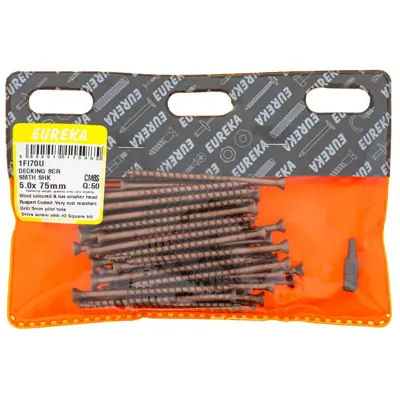
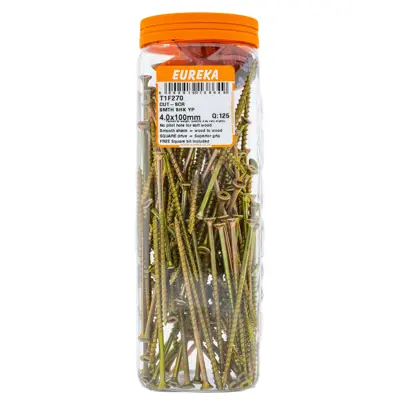
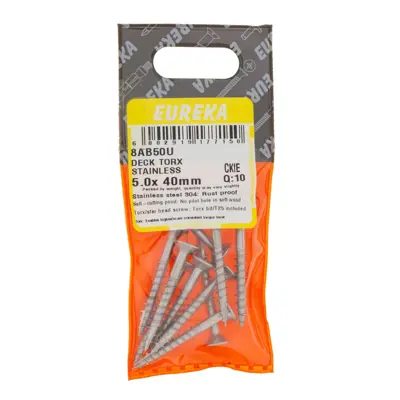
Chipboard and decking screws

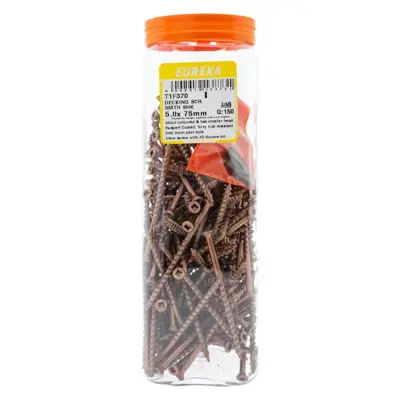


What you need
These links open the matching products in the HPM online store, with live prices (incl. VAT) and stock.
- Fasteners and adhesives - screws, plugs, anchors, bolts and nails
- Wall plugs - nylon and universal plugs, with or without screws
- Sleeve anchors
- Chemical anchors
- Drywall plugs and screws
- Masonry drill bits - same diameter as the plug
Questions and answers
What size drill bit do I use for a wall plug?
The same diameter as the plug: a 6 mm plug needs a 6 mm masonry bit, an 8 mm plug an 8 mm bit. Drill 10 to 20 mm deeper than the plug is long.
What size screw fits a 6 mm or 8 mm wall plug?
A 6 mm plug takes a screw 4 to 5 mm thick, and an 8 mm plug a screw 4.5 to 6 mm thick. The screw must be long enough to pass right through the plug: plug length, plus the thickness of what you are fixing, plus the thickness of the screw.
How do I fix something heavy to drywall?
Not into the board alone. Drywall plugs and toggles are for light and medium items. A TV bracket, basin, cupboard or loaded shelf must be screwed into the timber or steel studs, or through to the brickwork behind.
What fixing do I use in hollow blocks?
For light loads, a universal plug that knots up in the hollow. For heavy loads, a chemical anchor with a mesh sleeve. Sleeve anchors and expansion bolts push outwards and can crack the thin walls of a hollow block.
When should I use a chemical anchor instead of an expansion bolt?
Near an edge, in weaker masonry and in hollow block. A chemical anchor glues the rod in with resin and does not expand, so it does not try to split the wall. The hole must be cleaned of dust first.
Related guides
Delivery from HPM
Parcels up to 50 kg are delivered by courier anywhere in South Africa, with the rate shown at checkout. Heavy building materials such as cement, bricks, sand, stone and timber are delivered by our own trucks in the Western Cape, and any order can be collected free in Struisbaai.
WhatsApp 076 370 4367 for a quote, call 028 435 6331 or email [email protected].
Sources
The facts in this guide were checked against:
- Expansion plug SX Plus - technical data - fischer fixing systems
- Specification & Design Guide 2022 - Rawlplug
- Drywall / Hollow Wall and Ceiling Boards - Eureka (South Africa)
- Brick and Masonry - Eureka (South Africa)
- How post-installed anchors work under different loading conditions - Hilti
General guidance only. Products, sites and building rules differ - always follow the product data sheet and your approved plans, and check with your municipality or a registered professional where the work is structural, electrical or needs approval. More short answers: Building Facts & Advice.