In short
- Cement-based waterproofing is brushed onto bare brick, plaster or concrete and sets as part of the wall.
- It works from either side of the wall and can stay under water: damp walls, showers, retaining walls, ponds and tanks.
- It is rigid, so it is not for moving cracks or metal roofs.
- Wet the wall first, apply at least two coats, and keep the coating damp while it cures.
- Coverage differs widely between products: read the pack before you buy.
Cement-based waterproofing is a powder you mix into a slurry and brush onto brick, plaster or concrete. It soaks into the surface and sets as part of the wall, which is why it is the usual answer for damp walls, retaining walls, showers, ponds and reservoirs. It is also the product most often used in the wrong place. This guide explains where it works, where it does not, and how to apply it so that it lasts.
What cement-based waterproofing is
The powder is Portland cement, fine sand and chemicals that block the pores in masonry. There are two kinds:
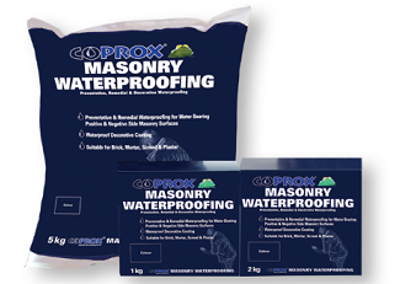
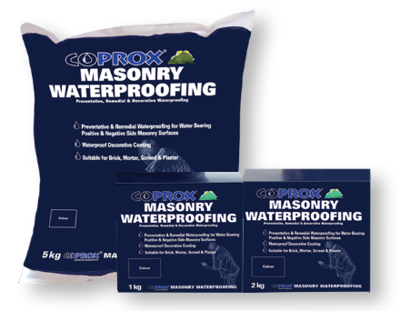
- One-part powders that you mix with water. Coprox Masonry Waterproofing is the best-known South African example. It comes in colours, lets the wall breathe and can be left as the finish.
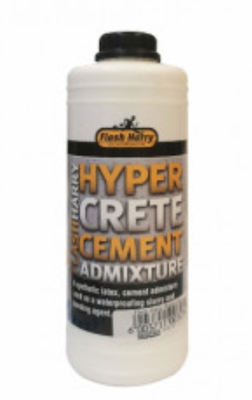
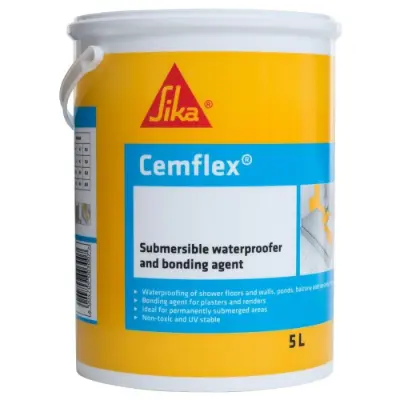
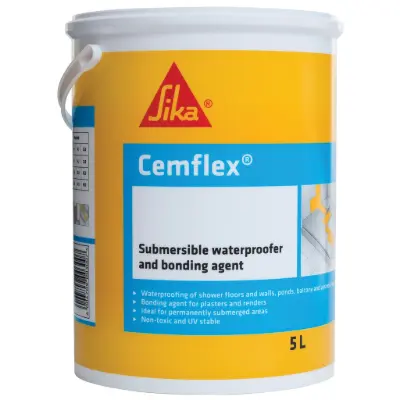
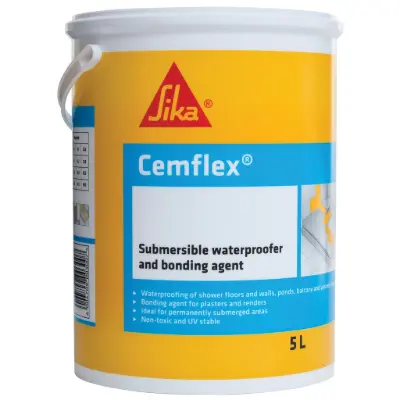
- Two-part kits with a powder and a liquid polymer, which bond better and, in some products, flex a little.
Unlike paint, these coatings can be applied on either side of the wall: on the side the water comes from, or on the inside with the water pushing from behind. That makes them useful where you cannot reach the outside, such as a wall built against the ground.
Where it works
- Walls with rising, falling or penetrating damp, once the cause has been dealt with.
- Retaining walls, boundary walls and planters.
- Showers, bathrooms and floors that will be tiled over.
- Basements and cellars.
- Ponds, water features, reservoirs and tanks. Check the maker's sheet if the water is for drinking or for fish: not every product is approved for both.
- Parapets and copings, with a bonding liquid added where the surface moves slightly.
It must go onto bare, porous masonry: brick, plaster, mortar, screed or concrete. Paint and old coatings have to come off first, because the coating must reach the masonry itself.
Where it does not work
- Moving cracks. A rigid cement coating cracks with the wall. Makers limit it to fine hairline cracks that do not move; wider cracks must be cut out and filled first, and a wall that keeps moving has a structural problem a coating will not fix.
- Metal roofs. It is not made for roof sheeting. Roof laps, screws and flashings need a flexible acrylic system with a membrane.
- Floors that are walked on. It is not a wearing surface. Cover it with tiles or a screed.
- Very rough, open brickwork. Plaster it first, then waterproof the plaster.
How to apply it
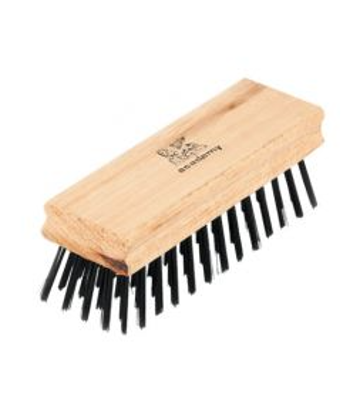
- Clean down to sound masonry. Remove dust, loose material, oil, mould and old paint. Brush off white salts with a stiff brush while the wall is dry.
- Wet the wall. This is the step people skip. Every maker wants the surface damp before the coating goes on: wetted thoroughly, but with no water standing or running on it. A wall that is already wet from damp or rain does not need to dry first.
- Mix as the pack says. For Coprox Masonry Waterproofing that is 5 litres of clean water to 5 kg of powder, sprinkled in slowly while you stir until it is smooth. Use it straight away and keep stirring. Two-part kits are mixed with their own liquid only: never add water to them.
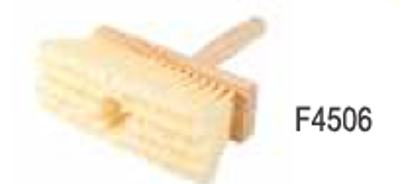
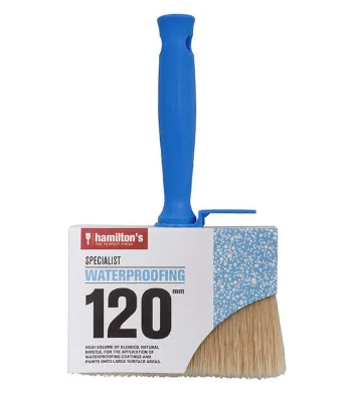
- Brush on at least two coats. Work it generously into holes, pinholes and fine cracks with a block brush. With Coprox the second coat goes on 6 to 8 hours or more after the first, onto a surface you have wetted again.
- Keep it damp while it cures. As the coat starts to dry, mist it with a fine spray of water, and repeat, more often in hot weather. This stops it crazing and going powdery. Some loose powder afterwards is normal and brushes off.
Do not apply it outdoors when rain is expected, in strong wind or hot direct sun. How far it goes depends entirely on the product. Coprox covers about 2.6 m² per kilogram for two coats on a wall. Heavy-duty slurries for ground water or reservoirs are applied far thicker, at 2 to 7 kg per square metre in two or three coats. Read the coverage on the pack before you work out how much to buy.
Ponds, water features and tanks
For water-holding work use the full number of coats the maker gives for that purpose. With Coprox, wait at least 24 hours after the second coat has cured, hose the surface down thoroughly several times and mop it out before filling with clean water. The water must be aged and treated before fish or plants go in.
Painting and finishing over it
Coprox is coloured and can be left as a slightly mottled finish, or used as a waterproof base under ordinary paint. Other cement-based coatings can be painted with a good-quality acrylic PVA once they have cured; some makers ask for seven days. Do not drill fixings through the coating afterwards: every hole is a leak.
Cement-based or acrylic waterproofing?
| Cement-based coating | Acrylic with membrane | |
|---|---|---|
| Surface when applied | Damp | Dry |
| Flexibility | Rigid | Flexible |
| Standing water | Yes: ponds, tanks, below ground | No: must not hold ponding water |
| Use it for | Walls, showers, retaining walls, ponds | Roof laps and screws, flashings, parapets |
Roofs are covered in coastal roof waterproofing, and finding the cause of a damp wall in damp-proofing basics.
Cement powders are alkaline and irritate skin and eyes: wear gloves and goggles, avoid breathing the dust and keep wash water out of drains.
Products for this job
In stock at HPM now, with today's prices (incl. VAT). Tap a product for details, delivery and to add it to your cart.
Cement-based waterproofing
Brushes for slurry coatings
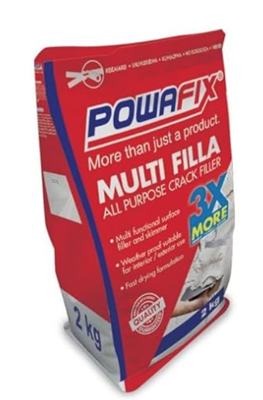
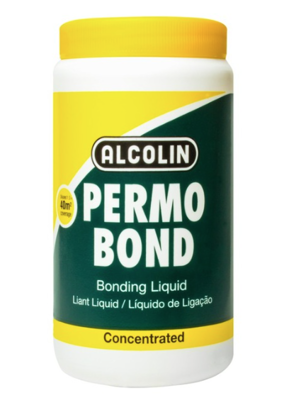
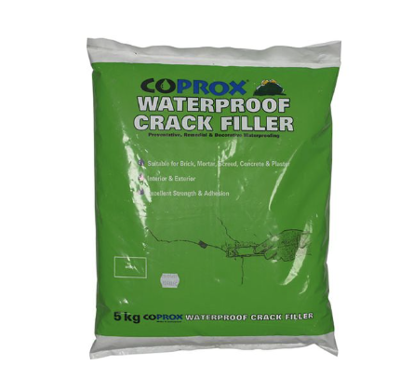
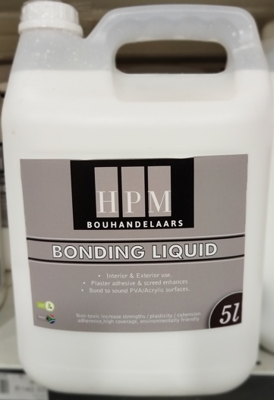
Crack fillers and bonding liquid
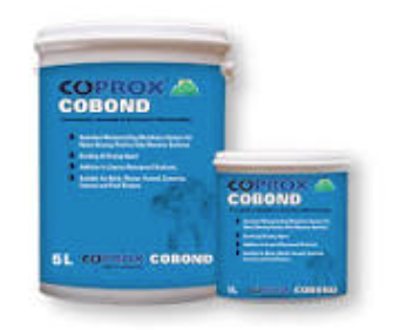
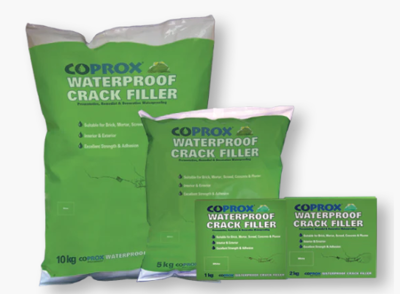
What you need
These links open the matching products in the HPM online store, with live prices (incl. VAT) and stock.
- Coprox masonry waterproofing - powder in several colours, bonding agent and crack filler
- Insulation and waterproofing - cement-based, acrylic and bitumen products
- Block brushes - the brush for slurry coatings
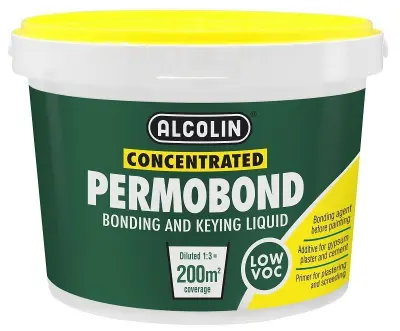
- Bonding liquid
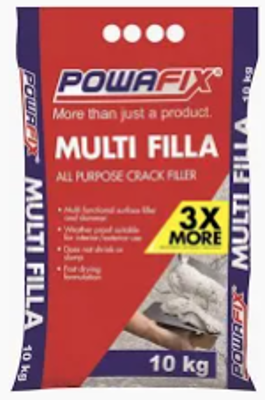
- Crack fillers - fill cracks before you coat
- Gloves and goggles
Questions and answers
Do I wet the wall before applying Coprox?
Yes. Coprox says to wet the surface thoroughly with clean water first, and a wall that is already wet from damp or rain does not need to dry out. The other cement-based coatings are the same: the masonry must be damp, with no water standing or running on it.
How many coats of cement-based waterproofing do I need?
At least two. With Coprox the second coat goes on 6 to 8 hours or more after the first, onto a re-wetted surface. Heavy-duty slurries for reservoirs or ground water pressure need three coats. Follow the pack for the job you are doing.
How much Coprox do I need?
Coprox Masonry Waterproofing covers about 2.6 square metres per kilogram for two coats, so a 5 kg pack does about 13 square metres of wall. Other products are applied much thicker, so check the coverage on the pack.
Can I use cement-based waterproofing on a roof?
Not on metal roof sheeting, and not on joints that move. Roof laps, screws and flashings need a flexible acrylic waterproofing system with a membrane. Cement-based coatings are for masonry: walls, showers, retaining walls, ponds and tanks.
Can I paint over cement-based waterproofing?
Yes, once it has cured. Coprox can be left as a coloured finish or used as a waterproof base under ordinary paint. Other makers allow a good-quality acrylic PVA over their coatings, some only after seven days.
Related guides
Delivery from HPM
Parcels up to 50 kg are delivered by courier anywhere in South Africa, with the rate shown at checkout. Heavy building materials such as cement, bricks, sand, stone and timber are delivered by our own trucks in the Western Cape, and any order can be collected free in Struisbaai.
WhatsApp 076 370 4367 for a quote, call 028 435 6331 or email [email protected].
Sources
The facts in this guide were checked against:
- Coprox Masonry Waterproofing - Instructions - Coprox International
- SikaTop Seal-107 ZA - Product Data Sheet (2020) - Sika South Africa
- dura.slurry - Cementitious waterproofing slurry data sheet (2022) - a.b.e. Construction Chemicals
- MatFlex Datasheet (2026) - Cemcrete
- Sika RainTite - Product Data Sheet (2021) - Sika South Africa
General guidance only. Products, sites and building rules differ - always follow the product data sheet and your approved plans, and check with your municipality or a registered professional where the work is structural, electrical or needs approval. More short answers: Building Facts & Advice.